
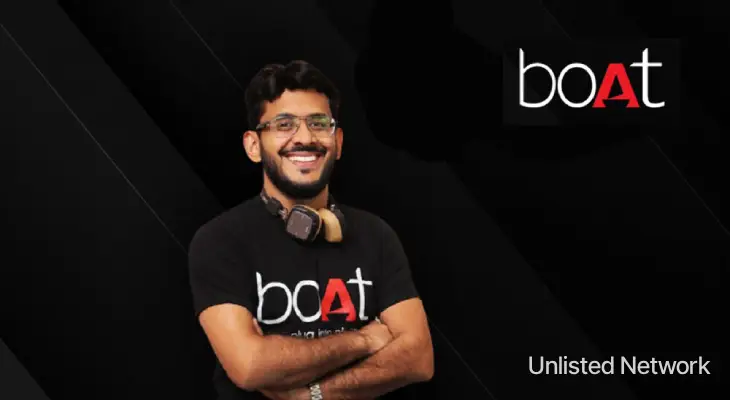
For India’s largest audio wearables brand, the party isn’t over—but the music has changed. After riding an unprecedented wave of post-pandemic demand, boAt now finds itself at a critical inflection point. The question on every investor’s and consumer’s mind is whether the brand is entering a phase of consolidation, preparing for a comeback, or signaling caution.
The numbers tell a story of dominance. boAt has led the Indian audio market for 13 consecutive quarters, commanding a formidable 30-33% market share in the true wireless stereo (TWS) and audio devices segment—nearly double that of its nearest competitor. But in the dynamic world of consumer electronics, past performance is no guarantee of future relevance.
Recent strategic moves by the company suggest that boAt is acutely aware of the shifting landscape. From diving deep into semiconductor design to restructuring its leadership for new growth engines, the brand is scripting a post-boom playbook that deserves a closer look.
The Post-Pandemic Landscape: From Hyper-Growth to Normalization
The COVID-19 pandemic was a rocket ship for boAt. With work-from-home and online learning becoming the norm, demand for personal audio devices exploded. The company capitalized on this with agile marketing, celebrity endorsements, and a product pipeline that catered to the style-conscious Indian youth.
However, the “boom” period has naturally moderated. As Sameer Mehta, co-founder and CEO, acknowledged, “Post-COVID, the boom has slowed.” This normalization is not unique to boAt; it reflects a broader market correction as consumer spending patterns revert to pre-pandemic mixes and the market becomes saturated with competitors.
This slowdown does not signal a decline but rather a transition from hyper-growth to sustainable, long-term expansion. The challenge for boAt is no longer just about capturing market share—it is about defending its turf against aggressive rivals while expanding the total addressable market.
Strategic Pivot 1: Deep-Tech Localization and Semiconductor Play
Perhaps the most significant indicator of boAt’s long-term vision is its bold foray into semiconductor design. In a move that shifts the company from an assembler to an innovator, boAt has partnered with Bengaluru-based semiconductor startup HrdWyr to co-develop a Made-in-India chip.
The new chip, named the HrdWyr Indus 1011, is an MCU-class System-on-Chip (SoC) designed specifically for headset charging cases. This is not just a symbolic gesture toward the “Atmanirbhar Bharat” initiative; it is a strategic business decision with tangible benefits.
-
Supply Chain Sovereignty: By localizing chip development, boAt aims to reduce its dependence on imports from Taiwan and China, gaining tighter control over its supply chain and achieving shorter lead times.
-
Performance Enhancement: The chip promises 20-30% better charging efficiency and integrates power management capabilities, directly improving the user experience.
-
Domestic Manufacturing: In a significant endorsement of India’s manufacturing ecosystem, the chip will be assembled and packaged by Tata Electronics.
-
Scale and Roadmap: boAt plans to integrate this chip into 25% of its devices by 2026, starting with its premium Nirvana range. Over time, the company intends to layer in AI features to optimize battery performance intelligently.
This deep-tech pivot signals that boAt is thinking beyond assembly and branding. It is investing in intellectual property and building barriers to entry that discount competitors cannot easily cross.
Strategic Pivot 2: Leadership Expansion and New Business Verticals
A company’s strategic direction is often reflected in its leadership structure. In early 2026, boAt announced the expansion of Shrey Walia’s role, appointing him as business head for new business verticals, in addition to his existing responsibilities overseeing wearables and accessories.
This move is a clear signal that boAt is actively looking beyond its core categories. The company is not content to rest on its laurels as an audio brand; it is actively scouting for new and emerging business opportunities.
-
Mandate: Walia’s expanded role involves identifying and developing scalable business models aligned with boAt’s long-term growth strategy.
-
Rationale: Gaurav Nayyar, CEO of boAt, articulated this shift perfectly, stating, “As boAt continues to evolve beyond its core categories, building new growth engines becomes critical.”
What could these new verticals be? While the company has not made specific announcements, the logical adjacencies could include smart wearables (beyond audio), smart home devices, or even personal grooming appliances—categories where brand recall and distribution synergies are high.
The Production Pivot: Deepening the “Made in India” Commitment
Localization is not new for boAt, but the company is doubling down on it. Currently, approximately 80% of boAt’s 30 million annual units—roughly 24 million devices—are already manufactured in India. The stated goal is to raise this figure to 90-95% .
This aggressive localization serves multiple purposes:
-
Cost Efficiency: Reduces logistics costs and mitigates tariff-related risks.
-
Speed to Market: Shorter supply chains mean faster response to changing consumer trends.
-
Brand Equity: In a market where “vocal for local” resonates deeply, domestic manufacturing is a powerful marketing tool.
Market Dynamics: Premiumization and AI as Growth Drivers
Looking ahead, boAt is betting on two major trends to drive the next wave of growth:
-
Premiumization: The Indian consumer is upgrading. The demand for higher-quality audio, better build materials, and feature-rich devices is on the rise. boAt’s strategy of debuting its indigenous chip in the premium Nirvana range underscores its focus on capturing this value-conscious yet quality-seeking customer.
-
AI Integration: Artificial intelligence is poised to be a major catalyst for replacement cycles. Mehta highlighted “AI on voice” as a significant trend. Smarter assistants, adaptive audio based on environment, and AI-driven battery management could make existing devices feel obsolete, spurring upgrades.
The Verdict: Consolidation, Comeback, or Caution?
So, where does boAt stand?
-
It is not mere consolidation. The company is not passively defending its turf; it is actively investing in deep-tech R&D and exploring new categories. This is offensive strategy, not defensive.
-
It is setting the stage for a structural comeback. The “comeback” for boAt will not be a return to pandemic-era growth rates, but an evolution into a more diversified, technologically sophisticated consumer electronics powerhouse. The semiconductor partnership is the bedrock of this transformation.
-
Caution is warranted, but not panic. The slowdown in the post-COVID audio boom is real. Competition remains intense. The success of the new business verticals is unproven. However, boAt’s dominant market share, its aggressive localization, and its willingness to invest in core technology suggest a company building for the long haul, not one retreating from the field.
boAt after the boom is a company in transition—from a fast-growing brand to a mature, diversified technology player. Whether this transition results in sustained market leadership or exposes new vulnerabilities will depend entirely on execution. For now, the strategic direction is sound, and the commitment to innovation is clear.
Disclaimer: This article is for informational purposes only and does not constitute investment advice. Please consult your financial advisor before making any investment decisions.